
Energy is essential for every function in the human body. From breathing and thinking to moving muscles and repairing tissues, all of these processes depend on energy produced at the cellular level. But how exactly does this energy production work inside your cells?
In this article, we’ll explore how your body generates energy, the role of mitochondria, and why cellular energy is so important for overall health and vitality.
What Is Cellular Energy?
Cellular energy refers to the energy that cells use to perform their functions. This energy is stored and transferred in the form of a molecule called ATP (adenosine triphosphate). ATP acts like a rechargeable battery for your cells, providing immediate energy whenever it’s needed.
Without adequate ATP production, cells cannot function properly, leading to fatigue, poor performance, and long-term health issues.
The Role of Mitochondria: The Powerhouses of the Cell
Mitochondria are specialized structures found inside most of your cells. They are often called the “powerhouses of the cell” because they are responsible for producing the majority of ATP.
Each cell can contain hundreds or even thousands of mitochondria, depending on its energy demands. Muscle cells, brain cells, and heart cells, for example, require large amounts of energy and therefore contain many mitochondria.
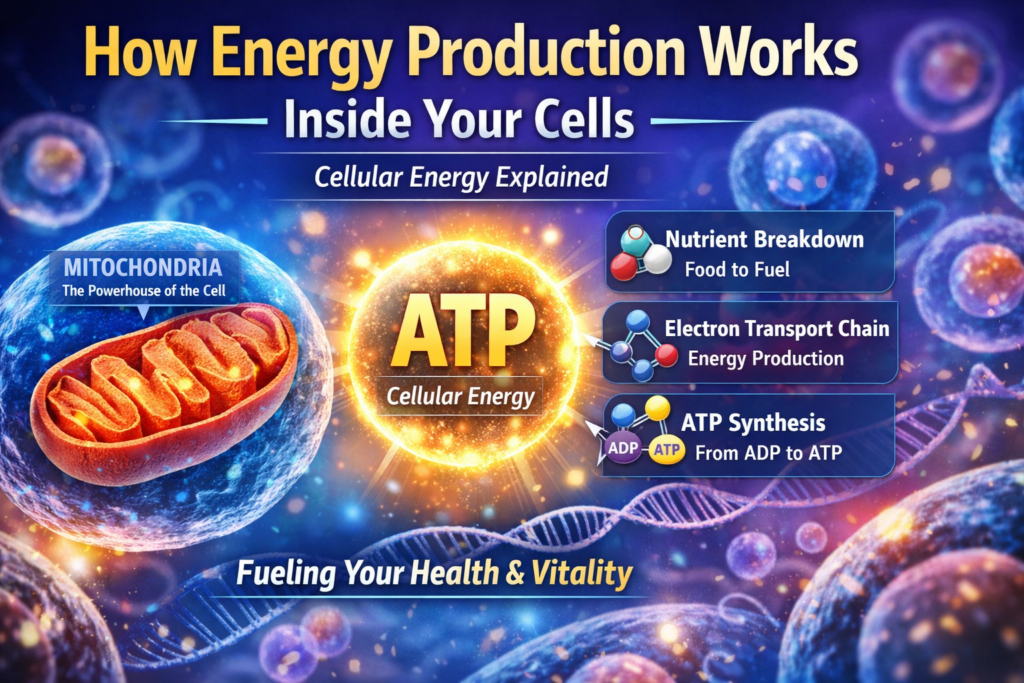
How Energy Is Produced Inside the Cell
Energy production is a multi-step process that mainly occurs inside the mitochondria. Here’s a simplified breakdown:
- Nutrient Breakdown
The food you eat—carbohydrates, fats, and proteins—is broken down into smaller molecules such as glucose and fatty acids. - Electron Transport Chain
These molecules enter the mitochondria, where they are used in a series of chemical reactions known as the electron transport chain. This process releases energy. - ATP Synthesis
The released energy is used to convert ADP into ATP, which the cell can then use to power biological processes.
This process is known as cellular respiration and requires oxygen, which is why oxygen is so vital for human life.
Why Cellular Energy Matters for Your Health
Efficient energy production supports nearly every aspect of health, including:
- Physical endurance and strength
- Brain function and mental clarity
- Metabolism and weight management
- Immune system performance
- Healthy aging
When mitochondrial function declines—due to aging, poor nutrition, stress, or lack of exercise—energy levels can drop, leading to chronic fatigue and reduced quality of life.

Supporting Healthy Energy Production
You can support your cellular energy production through lifestyle choices such as:
- Eating nutrient-dense foods rich in vitamins and minerals
- Staying physically active
- Getting enough sleep
- Managing stress
- Avoiding excessive toxins and processed foods
Some people also explore supplements designed to support mitochondrial function and cellular energy, especially as they age.
Final Thoughts
Energy production inside your cells is a complex but vital process that keeps your body functioning at its best. By understanding how your cells produce energy and taking steps to support mitochondrial health, you can improve your vitality, performance, and overall well-being.
Your energy starts at the cellular level—and caring for your cells means caring for your health.